

THREE WORLDS DIARY
Pathfinders
Matthew 18:1-3
At that time the disciples came to Jesus and asked, “Who, then, is the greatest in the kingdom of heaven?”
He called a little child to him and placed the child among them. And he said: “Truly I tell you, unless you change and become like little children, you will never enter the kingdom of heaven.”
Children live in the now. Yesterday is a dissipating, vague memory; tomorrow is not something that begs much thought.
In the Shubra Church of God, our church family in Cairo, there is a 4-year old little girl who has significant physical limitations, but when she worships the Lord, she transitions into a world all her own. During the lively music service, she dances up the center aisle, skipping and twirling, stopping occasionally to acknowledge another fellow worshiper with a smile and a hug. As she moves up the aisle to the front, she hangs a left at the main platform, down the side aisle to the back of the church, then repeats. She has left all her worldly cares behind. Now it’s just her and Jesus. If I’m going to enter the kingdom of heaven, I’m going to have to find my dancing shoes.
In our neighborhood in the southern district of Cairo, there are children who go from house to house collecting mountains of garbage from designated containers into a big, woven polypropylene bag (which is usually larger than themselves), slinging it over their shoulder and hoisting it up onto the deck of a donkey drawn wagon. During the day, when the children are busy with the task at hand, I often meet their eyes and they smile warmly. But in the evening, the golden hour just before sunset, is when I love to observe them. The workday has ended, the wagons have been unloaded to big trucks, and it’s time for evening joy riding. The street echoes with the clopping of the donkeys and laughter of these children.
Cairo’s “garbage cities” are the destinations of the trucks piled high with the city’s garbage. The families of the garbage gatherers, who are Christians, live in these cities and their work is hand-sorting the day’s garbage. They live hard lives.
Egypt is a country brimming with children, some whose bellies are filled from day to day, while others’ daily bread is not nearly enough. Yet, all intrinsically find cause to laugh and play throughout their day. Most of us from the West cannot begin to imagine this super-power to express joy in the midst of hardship.
We live in Cairo’s southern district of Maadi. Our home is only several hundred yards from the mighty Nile River. Egyptian tradition tells us that two thousand years ago the Holy Family, in their journey south along the Nile, stopped nearby for some time of rest. I’ve caught myself, on occasion, imagining young Jesus laughing and playing with the other children here; living in the moment. Perhaps it was his childhood in Egypt or other childhood experiences He is remembering when He says, “unless you change and become like little children, you will never enter the kingdom of heaven.” This observation of the unencumbered freedom of children is something He doesn’t want us to miss.
Ministry has its fair share of days filled with struggle. We walk alongside those carrying heavy burdens, and we carry heavy burdens ourselves. In all of this, may we be reminded to enter into our own unencumbered expression, like the dance of the worship princess from Shubra or the joy of the donkey crew, simple acts of letting go that lead us to His kingdom here on earth, as it is in heaven.
Staying Long Enough to Matter: Why Presence Is the Mission
Discover how long-term missionary presence is transforming lives in Birkenhead, England. Zach & Audrey Langford share real stories of relational ministry, community impact, and why staying matters in post-Christian Europe.

“Grab a cuppa ☕…”
That’s usually how we like to start because most of what we do here in Birkenhead, England begins the same way:
sitting down, making space, and taking time to be present.
But here’s something we’ve come to realize over the years:
Most missionaries don’t stay as long as people think.
Across many mission organizations, the average time on the field is often around 3–5 years. There are lots of reasons for that, some practical, some personal, but in places like ours, we’ve seen how much time itself shapes the work.
Depending on the organization and context, career missionaries often serve an average of 3–5 years on the field before transitioning out or moving roles. Some studies within Protestant mission agencies suggest even shorter effective tenures in difficult urban or post-Christian contexts due to burnout, funding instability, or isolation. Retention challenges are especially high in Western Europe, where visible “success” in ministry can take years, sometimes decades, to emerge.
In places like ours, we’ve seen how much time itself shapes the work.
When You Stop Being “The Missionaries”
When we first arrived in Birkenhead, we were outsiders. New accents. New culture. New everything. And over time, slowly, quietly, that began to change.
These days, we’re not just “the missionaries.” We’re the people who get called when life gets hard. That shift didn’t happen overnight. It happened through years of showing up in ordinary, often unseen ways.
Like when a young person had a birthday coming up, but no support system to help make it special. Dietary needs made even something simple, like cake, complicated. So they reached out to us. And we got to show up with dairy-free, soy-free cupcakes, ready for the celebration.
Or when tensions at home escalated between a mum and her child to the point where running away was being threatened. And again, they called us.
We didn’t fix it in a moment. But we showed up. We listened. We spent time with each of them, not just that day, but in the weeks and months that followed, walking with them toward something healthier.
This is what ministry looks like here.
It’s not big stages or big moments. It’s being present long enough that people know they’re not alone.
The Table That Keeps Showing Up
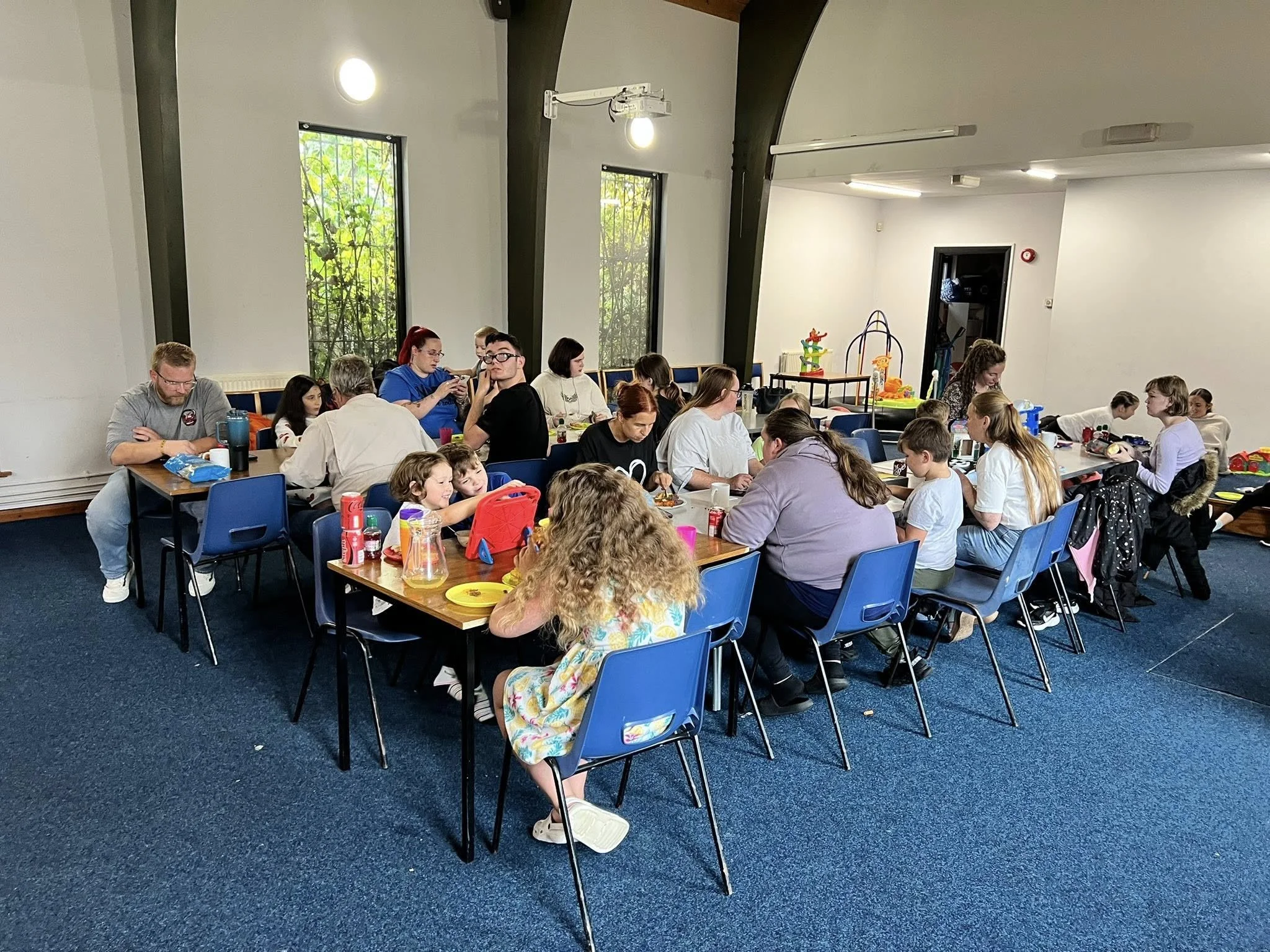
For the past three years, we’ve helped host a simple rhythm at our church:
A community meal. Every other week.
No pressure. No expectations. Just a table.
And honestly? At first it just felt like…a meal.
But over time, something deeper started to happen.
People kept coming.
Conversations grew.
Trust formed.
In a community where many feel isolated or disconnected, that table became a place where people could belong before they believed.
And now, after years of shared meals and shared life…
👉 A small Bible study is beginning among some of the mums who first came just to eat.
That’s the kind of thing that reminds us: this slow work matters.
Why We’re Still Here
We’ve now spent over 12.5 years of the last sixteen in Birkenhead, England, a place where ministry doesn’t follow quick-win narratives.
This is a post-Christian context. Many people we meet haven’t grown up around church or faith. Some carry skepticism. Others just feel disconnected from it entirely.
So we don’t rush.
We stay.
We build relationships.
We trust that God is at work in ways we don’t always see right away.
Because sometimes the most important thing we can do…is simply be present.
Come Along With Us
If you’ve read this far, you’re already part of the story in some way and we’re really grateful for that.
If you’d like to stay connected, hear more stories, and see what God is doing here in Birkenhead, we’d love to invite you to journey with us:
👉 Subscribe to our newsletter: https://mailchi.mp/950283426212/langford_subscribe
👉 Learn more: www.chogglobal.org/zalangford
👉Follow along on social @langfords3w
Human Trafficking: Myth or Reality?
The most pervasive myth about human trafficking is that it often involves kidnapping or physically forcing someone into a situation.
⇒ Reality: Most traffickers use psychological means such as tricking, defrauding, manipulating, or threatening victims into providing commercial sex or exploitative labor.
“Traffickers target victims they don’t know.”
⇒ Reality: Many survivors have been trafficked by romantic partners, including spouses, and by family members, including parents.
“Only women and girls can be victims and survivors of sex trafficking.”
⇒ Reality: Men and boys are also victimized by sex traffickers. LGBTQ boys and young men are seen as particularly vulnerable to trafficking.
"People being trafficked are physically unable to leave their situations/locked in/held against their will."
⇒ Reality: That is sometimes the case. More often, however, people in trafficking situations stay for reasons that are more complicated. Some lack the basic necessities to physically get out – such as transportation or a safe place to live. Some are afraid for their safety. Some have been so effectively manipulated that they do not identify at that point as being under the control of another person.
"All commercial sex is human trafficking."
⇒ Reality: All commercial sex involving a minor is legally considered human trafficking. Commercial sex involving an adult is human trafficking if the person providing commercial sex is doing so against his or her will as a result of force, fraud or coercion.
Meet Aylin*
She came to Germany from Bulgaria many years ago because of a promise that she could work in a hotel. She left her children with relatives and accompanied by the man she saw as her savior, traveled to Berlin. Upon arrival, her ID was taken, the violence began, and she was forced into prostitution. This is just one way perpetrators lure women away from their families and into prostitution in Berlin, where this is a legal, commercialized profession.
Promises given. Promises broken. Betrayal. Descent into desperation. Identity perverted.
Through long‑term counseling at p.ink door berlin** Aylin developed goals, learned how to write a CV, and applied for social benefits and employment opportunities. She faced her trauma head on through p.ink door’s counseling services. She was able to leave prostitution, find employment, and secure her own apartment after years of housing insecurity. Today, Aylin’s life is stable and she is flourishing. And the most remarkable part? She is discovering a new identity as one who is loved and created by God.
*Name changed to protect anonymity.
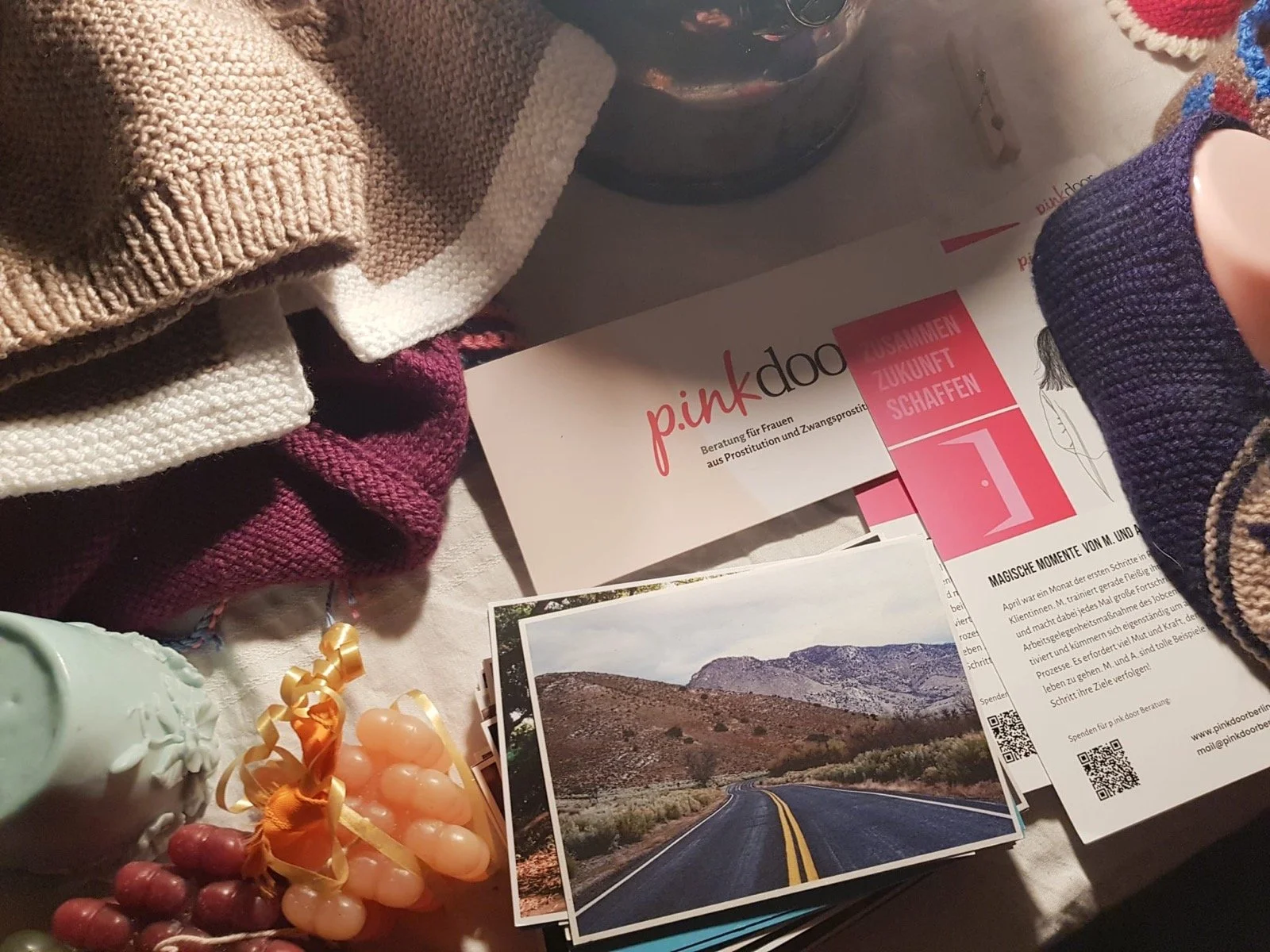
**p.ink door berlin is a not-for-profit organization founded 11 years ago by Global Strategy personnel and Germans in Berlin. www.pinkdoorberlin.org
To read more about the Global Strategy project that supports the work of p.ink door berlin, visit chogglobal.org/pinkdoor
A brief glimpse into the “Irregular Regular Lives of Missionaries…”
(Daniel & Christy Kihm live in Budapest, Hungary, with their daughter Sofie and serve in the EME region.)
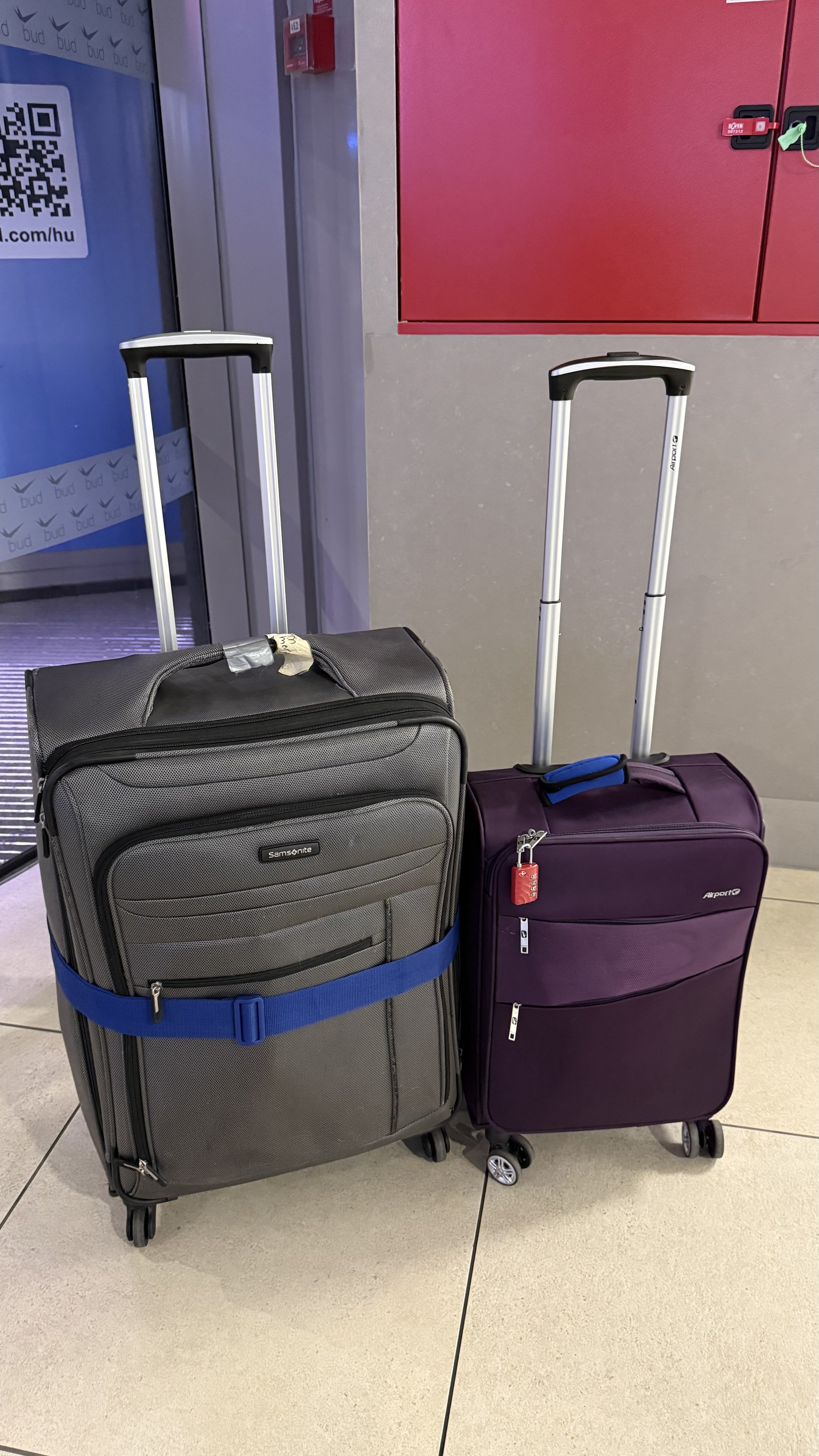
As this gets published to the online world, I (Dan) have just arrived into the US. Alone. Christy and Sofie will join me in a handful of weeks.
This begins our Home Ministry Assignment. And also, our Totalization, a process whereby we are required to leave Hungary for at least 6 consecutive months every 5 years.
In a lot of ways, the above sentences encapsulate the regular life of a missionary, which is also wholly irregular!
Often we are asked by supporters: “What is a normal week like for you?”
What a normal, good question. But also what a laughable thought.
We have no normal week. ;-)
As an example, one week ago, we were leaving northern Italy (after spending time with our church in Arco), and flying directly to Madrid, Spain (to spend time with our church in Madrid, En Mi Lugar). In one week, I will be in North Carolina and Virginia.
There are a lot of great joys with the job of being a missionary. It’s wonderful to get to travel widely and see new places. It’s wonderful to spend our lives relationally, pouring into dear friends new and old.
But it’s also complicated.
Case in point: Why am I coming to the States solo, with my family joining me later?
Because we have a daughter who will be starting high school in the fall. And by my leaving now, my 6-month clock will allow me to return with Sofie for a relatively seamless transition to high school.
Being away from one’s home for 6 months is not a small feat, either. There are loads of preparatory things that must be accomplished. What about those houseplants? Mail? Bills? Etc.
As a point of comparison, my parents have not been away from their house for more than 2 weeks. Since 1985!!!
And yet, this is a regular activity for missionaries.
For some it’s even more complicated than it is for us. Maybe they have a longer time they are required to be away. Or multiple children. Or the local ministry activities are less easy for them to step away from.
Irregular regular missionaries live in a world of constant transitions and adaptations.
We, as always, are indebted to so many of you who sacrifice your time and finances to enable us to serve in the roles we are called to. We are indebted to so many of you who pray unceasingly on our behalf.
Thank you for allowing us to regularly serve in an irregular manner. :-)
NextGen
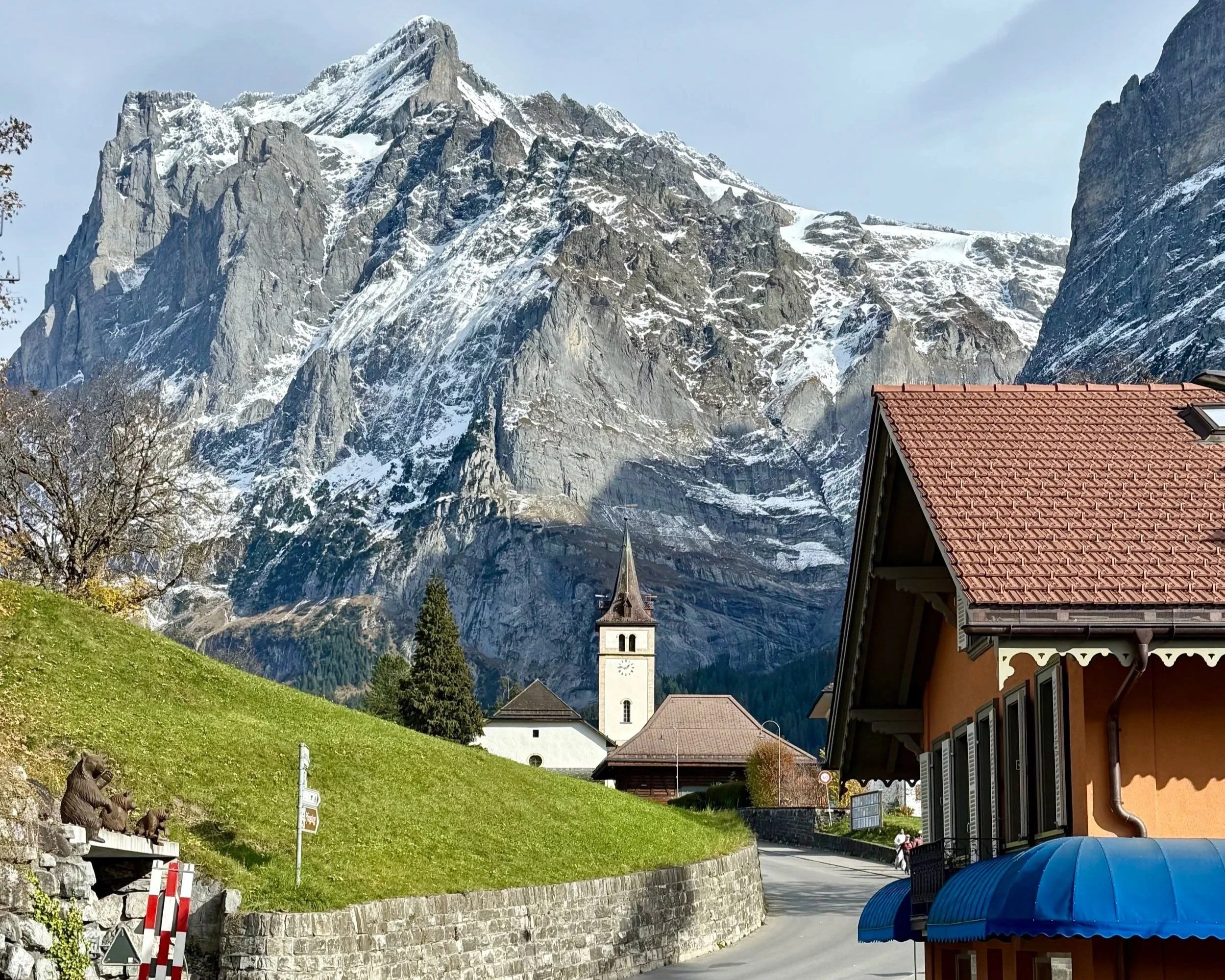
The landscape of ministry in Europe and the Middle East could easily be compared to a journey into the Swiss or Italian Alps – navigating switchbacks with the uncertainty of exactly what lies ahead, driving in low gear to make it up the steep inclines, giving thanks for the slow upward progress. But if the conditions are right and all comes together as it should, the white-knuckled intensity of the ascent rewards the traveler with breathtaking views at the top.
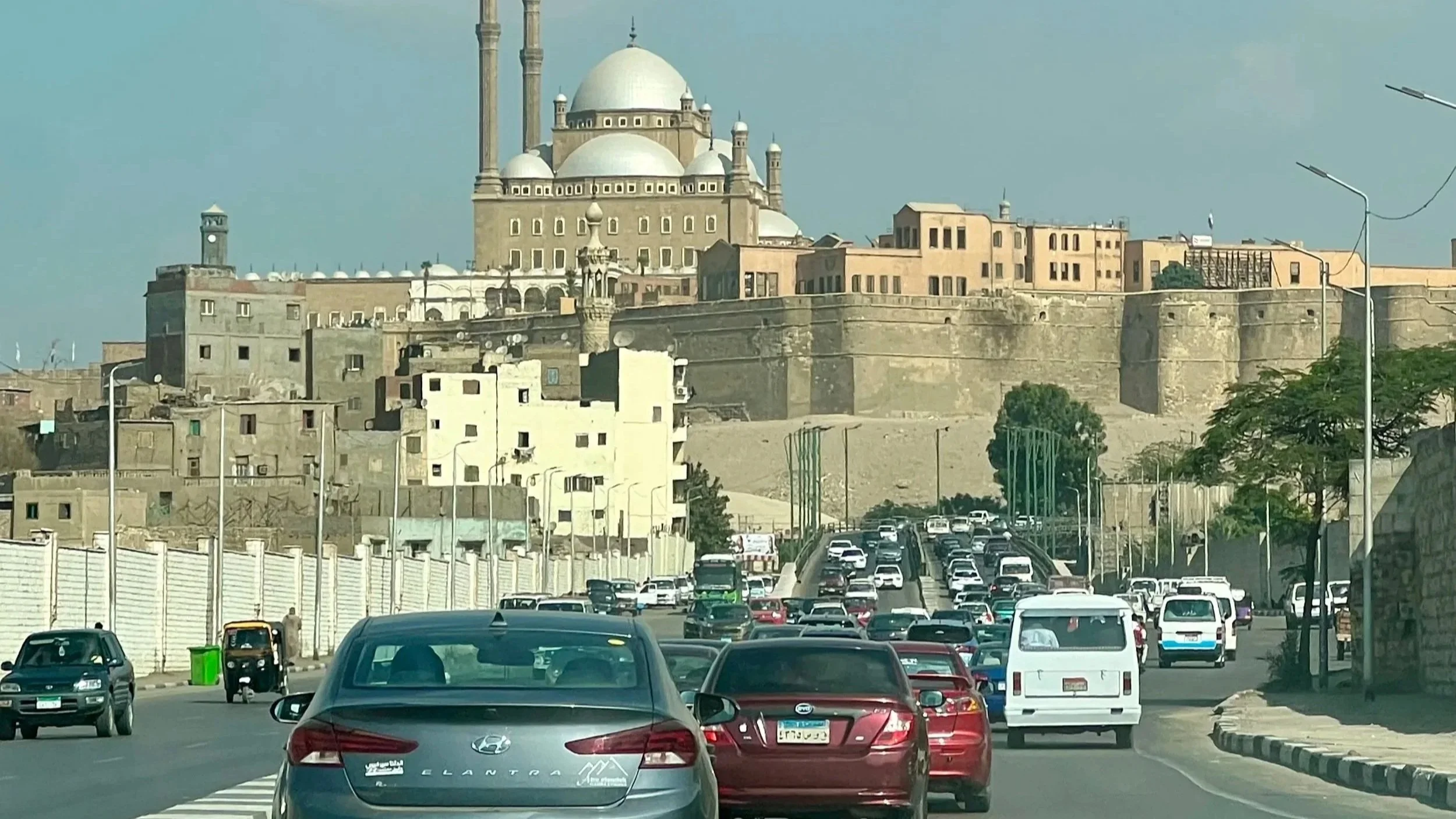
Another appropriate ministry comparison might be found in the excitement of a journey through the streets of downtown Cairo, Egypt – horns honking as a signal to the other drivers (who needs a turn signal anyway?), pedestrians crossing like characters in the old frogger game, vehicles traveling at night with no headlights on to illuminate the road ahead, "travel lanes" being completely disregarded. The stress and excitement of this version of the journey stands in stark contrast to the peace, joy, and warmth found along the way, in the hospitable presence of an Egyptian brother or sister in Christ.
The journey is sometimes stressful, lonely, slow, uncertain, chaotic....but when it's done with faithful intentionality and in community with God and with others, the reward in great.
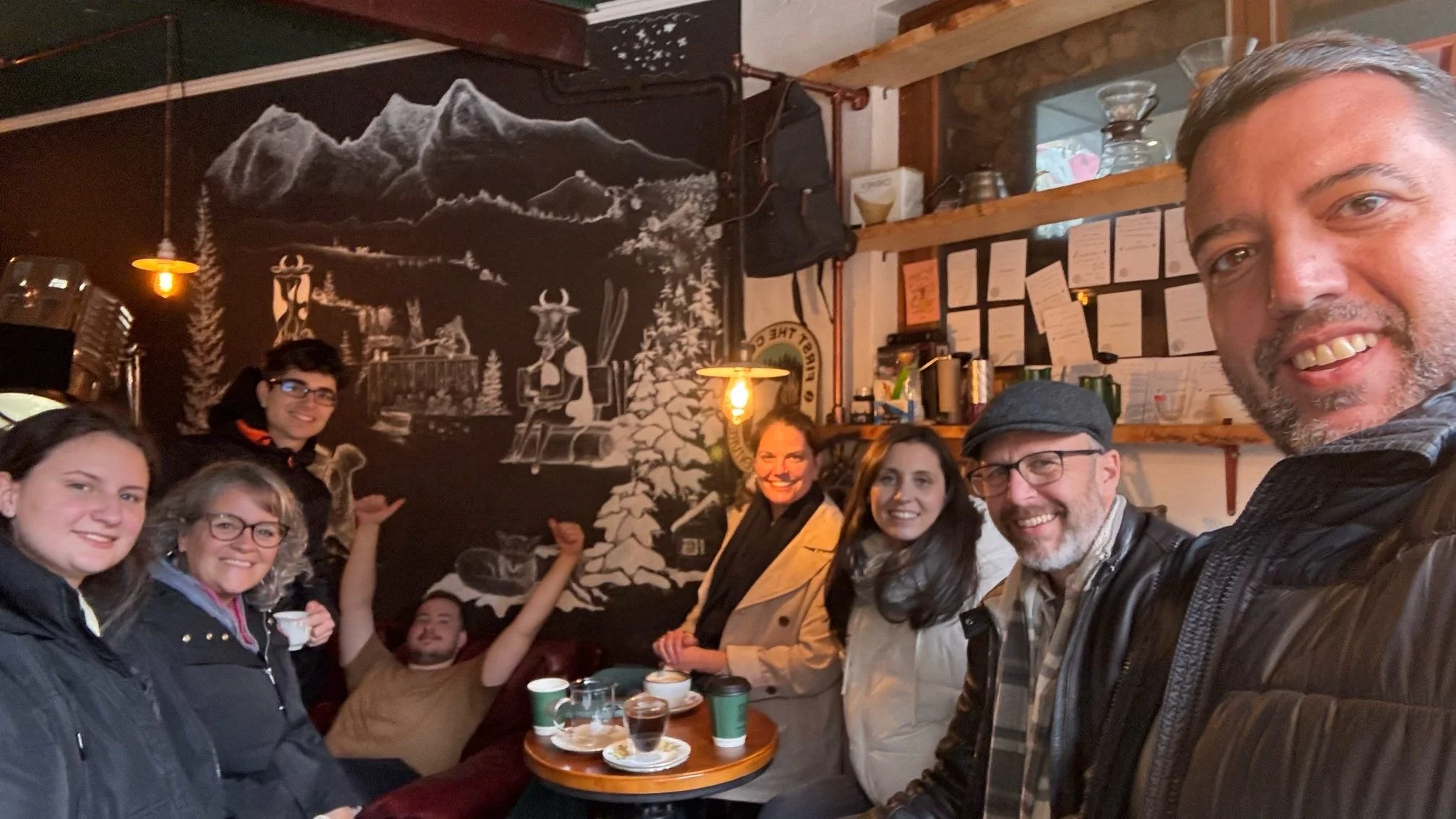
The reality is that Christians in the Europe and Middle East region are part of a minority group. Most often, resources are lacking. Opportunities to connect with likeminded believers are few and far between. Some days it's hard not to feel like a small fish making its way through a vast ocean. But despite the difficulty, uncertainty, and loneliness, God is doing great things throughout Europe and the Middle East. This continues to make the hard work worth it!
One of the ways our Three Worlds team is able to take part in the work of the local Church is through the NextGen Project. This is one tool we have to partner in the fruitful, meaningful work being done by young and emerging leaders in the region. The NextGen Project isn’t just another ministry initiative or short-term program, but a strategic, hope-filled investment in the future of the Church across Europe and the Middle East, a region that continues to weather profound spiritual, cultural, and social change.
At its core, the NextGen Project exists to empower local leaders. These are men and women who are already serving faithfully in their local contexts but who sometimes lack access to training, networks, and resources that many take for granted. Our team's vision compels us to see faith communities transforming lives and inspiring hope in places where the Church can feel isolated, under-resourced, or discouraged.
The project doesn’t focus on just one aspect of ministry. It supports a wide ecosystem of formation and care.
Creating Connection: Many leaders across Europe and the Middle East serve in isolation. The NextGen Project creates opportunities for them to connect with one another and with the broader Church of God movement through local and regional conferences and seminars. These relationships foster encouragement, accountability, and shared vision. We work hard to remind people that they are not alone!
Fostering Innovation: Through a variety of initiatives, young leaders are encouraged to engage their local communities with the Gospel in ways that are culturally sensitive, creative, and innovative. In a region where traditional methods may no longer connect with people, this kind of adaptability is essential.
Resourcing Leaders: NextGen supports strategic travel, which may sound secondary at first, but is actually transformative. Being present across borders, cultures, and contexts builds unity and a shared mission. It allows leaders to learn from one another firsthand and strengthens the regional Church in ways that digital communication simply can’t replace.
Caring for the Caregivers: Ministry in this region can be demanding, emotionally taxing, and spiritually heavy. Caring for the caregivers ensures sustainability and longevity, protecting those who have given their lives to serve.
The NextGen Project is an investment with long-term impact, and our team is so thankful for the opportunity to walk alongside the Church in Europe and the Middle East to facilitate the great work they do!
If you are interested in finding out more about this project or others, email us at nstatman@chog.org or read more by clicking here.